
Seabirds were an integral part of daily life in ancient Hawaiʻi and continue to be culturally significant to Hawaiian people. Seabirds that feed at sea and return to shore at night were used to navigate back to land from fishing or trading voyages. People fishing out at sea used gatherings of feeding seabirds to lead them to schools of fish, and still do today. Hawaiians also observed seabird behavior to indicate changing weather patterns. On land, ʻUaʻu (Hawaiian Petrel) chicks were harvested from their burrows as food for the Aliʻi, or Royal classes. Seabird feathers were used for intricate featherwork in ʻahu ʻula (capes), kāhili, (feather standards) and lei. Seabirds also appear in ancient Hawaiian mele and oli (chants, prayers, songs, proverbs). For example, a Hawaiian proverb for a family that only had one child was, “Hoʻokahi nō hua a ka ʻaʻo”, or, ‘For the ʻaʻo (Newell’s Shearwater) lays but a single egg.’
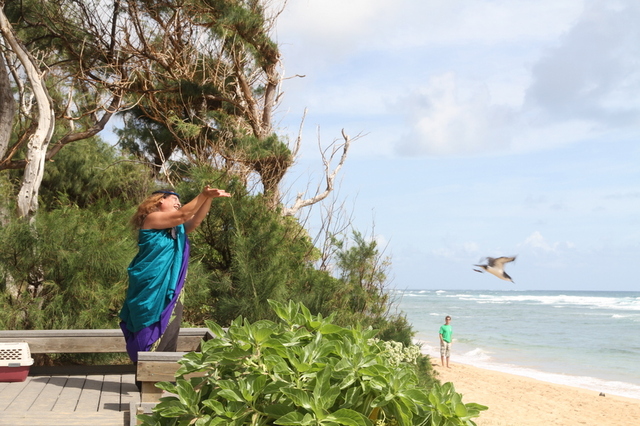
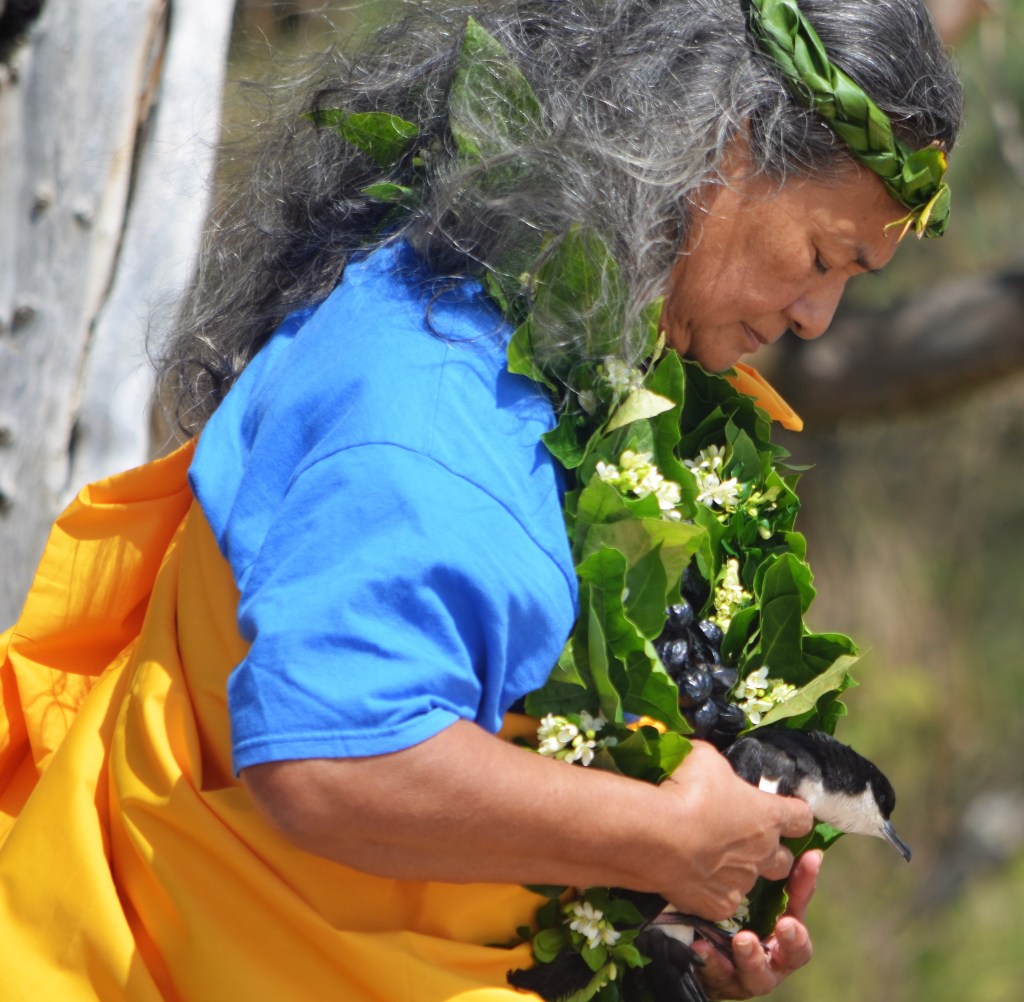
 Kauaʻi Endangered Seabird Recovery Project